The Fed Moved Before the Data Told It To
The case against September's rate rise was that the inflation was energy, not demand. Core inflation has since started to catch up.
On 16 September the Federal Reserve raised interest rates for the first time since 2023. The Federal Open Market Committee lifted its target range by a quarter point, to 3.75–4 per cent, undoing the cuts it had made the year before. The vote was unanimous. Kevin Warsh, who became chair in May after one of the closest confirmation votes in the Fed's history, has indicated another rise could come before the year is out. Markets now put the odds of a December increase near 90 per cent, up from roughly three-quarters.
On the numbers available in September, the decision looked premature. Headline inflation was running near 3.6 per cent, but core inflation, the measure that strips out food and energy, stood at 2.4 per cent. The gap was almost entirely energy, with Brent above $100 a barrel on the back of the war in Iran.
That distinction matters more than it sounds. Inflation is a sustained rise in the general price level. An oil-price rise is a relative price change: energy becomes dearer against everything else. Households feel poorer either way, but the cause differs, and so should the response.
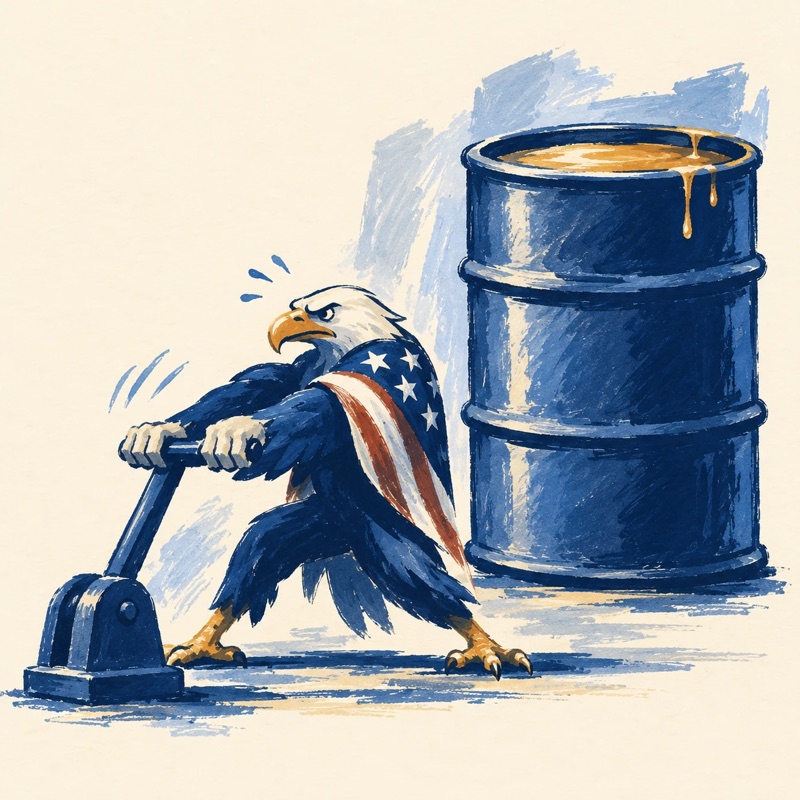
Higher rates work by making borrowing expensive. Firms postpone investment, households spend less, and demand pressing against supply weakens until prices ease. That works when too much money is chasing too few goods. It does nothing when the shortage is on the supply side. No interest rate has ever produced a barrel of oil.
The labour market pointed the same way. Average hourly earnings rose 3 per cent in the year to September, down from 3.1 per cent in August and the slowest pace since May 2021. Payrolls grew by 29,000, and the two preceding months were revised down. Wage-price spirals need bargaining power, and workers only extract compensating pay rises when labour is scarce. An economy adding 29,000 jobs a month is not one where that is happening.
So the Fed was tightening into an energy shock it could not fix, with no visible spiral to pre-empt. On the published data, the case was thin.
But the Fed was not responding to the published data. It was responding to what the data might become.
The fear is a repeat of the 1970s. An oil shock cut real wages, workers bargained to recover them, firms raised prices to cover the higher wage bill, and workers found themselves short again. Inflation stopped being a one-off and settled into the general price level. Breaking it took until 1980, when Paul Volcker raised rates close to 20 per cent and the recession that followed defined a decade.
There is a second argument, made less openly. Raising rates works as a signal as much as a policy. If firms and households believe the Fed will always respond, they set wages and prices as though inflation is heading back to 2 per cent, and that expectation does much of the work unaided. Credibility costs little to maintain and a great deal to rebuild. Warsh, new in the job and narrowly confirmed, has more reason than most to establish that he will act.
Monetary policy also works with a lag of twelve to eighteen months. A central bank waiting for pass-through to appear in the data is a central bank acting a year too late.
And the pass-through has started to appear. The September figures, published on 14 October, put core inflation at 2.6 per cent, up from 2.4, with headline at 3.7. Two prints do not make a trend, and one month's move is not proof. But it is the first evidence that the energy shock is feeding into prices beyond energy, which is precisely the risk the committee said it was acting against.
That does not vindicate the decision. It makes the alternative look worse. Had the Fed waited for confirmation, it would have been tightening into a spiral rather than ahead of one, and the rate needed to stop it would have been considerably higher than four per cent.
The committee will meet again on 28 October. On the evidence of the past month, the charge against it is not that it moved without cause. It is that it moved before the cause was visible, which, for a central bank whose main asset is being believed, is not obviously a mistake.
References
- Federal Reserve, Federal Reserve Issues FOMC Statement, 16 September 2026.
- Federal Reserve, Transcript of Chair Warsh's Press Conference, 16 September 2026.
- US Senate, Confirmation of Kevin Warsh as Chairman of the Federal Reserve Board, 13 May 2026.
- US Bureau of Labor Statistics, The Employment Situation — September 2026, 2 October 2026.
- US Bureau of Labor Statistics, Consumer Price Index — September 2026, 14 October 2026.
- Clare Lombardelli, The Outlook for Inflation, Bank of England, 24 September 2026.
- Federal Reserve History, The Great Inflation.
- Federal Reserve History, Volcker's Announcement of Anti-Inflation Measures.
- Federal Reserve History, Recession of 1981–82.